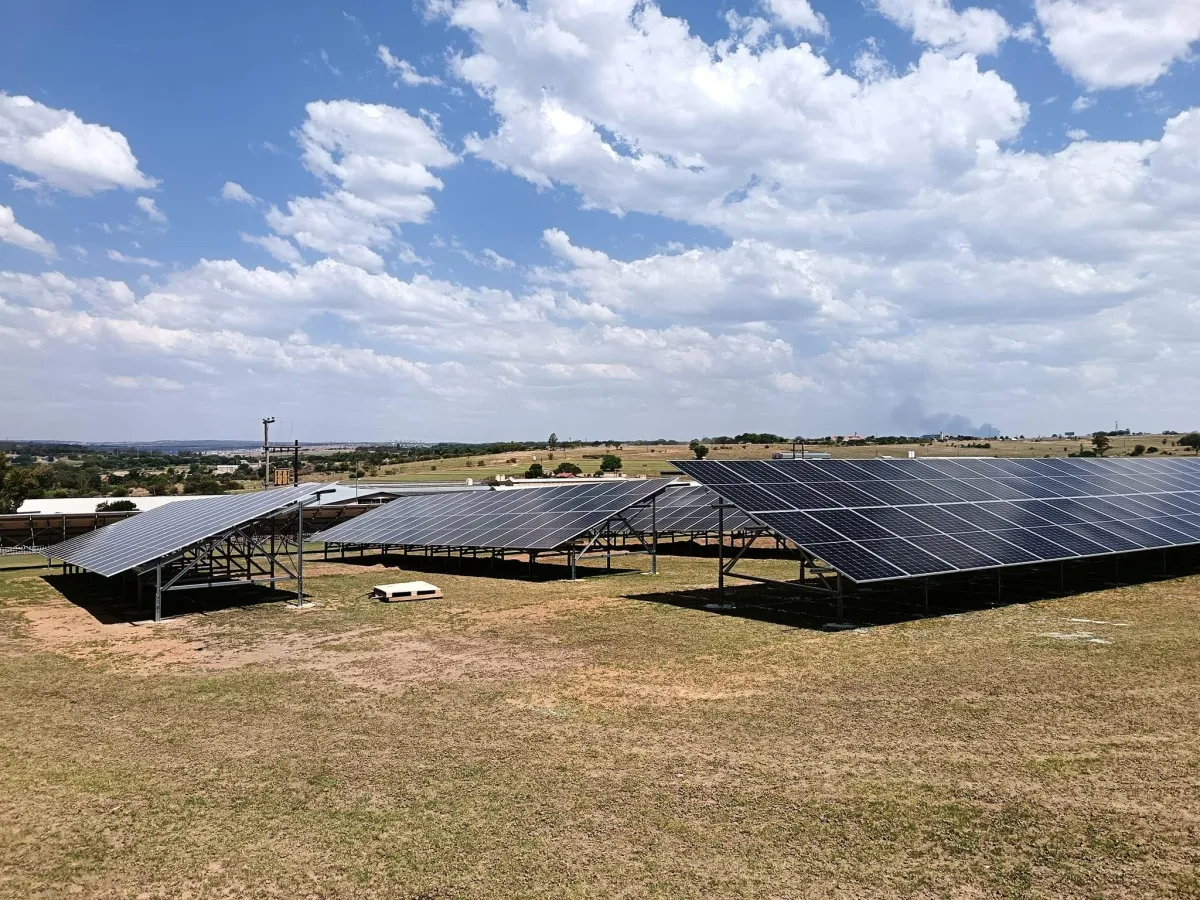
Solar for Manufacturing in South Africa | Grey West projects
Manufacturing Without Interruption: How Solar Keeps Your Production Line Running

In manufacturing, downtime is never just an inconvenience. When the power drops, machines stop, shifts stand idle, orders slip and raw materials can be wasted mid-process. For South African manufacturers, unreliable grid supply and electricity prices that rise faster than inflation have turned energy into one of the biggest risks on the factory floor.
More and more manufacturers are dealing with that risk the same way: by generating their own power with solar, backed up by batteries. Here is how it works, what it costs you not to act, and what to look for in a system.
What a Power Interruption Really Costs a Factory
The cost of an outage is much bigger than the electricity you didn’t use. A single interruption can trigger:
Lost production time — every hour a line stands still is output you can’t get back.
Wasted materials — batches stopped mid-process often have to be scrapped.
Restart losses — many machines need time to warm up, recalibrate or be cleared before production can resume.
Equipment damage — sudden shutdowns and power surges shorten the life of motors, drives and electronics.
Late deliveries — missed deadlines damage relationships and can cost you contracts.
Overtime and diesel — catching up means extra shifts, and generators burn expensive fuel.
Add these up over a year and most manufacturers find that unreliable power is costing them far more than they realised.
Solar Is a Production Asset, Not Just Backup Power
Solar used to be seen as an emergency measure. Today a well-designed commercial solar installation is a core part of how a factory runs. During the day, your panels supply power directly to your machines, lighting and climate control, which cuts the electricity you buy from the grid. Excess energy charges a battery bank, which keeps critical loads running when the grid fails or in the evening when tariffs peak.
The result is a factory that keeps producing regardless of what happens on the national grid.
Five Advantages of Solar for Manufacturers
1. Uninterrupted Operations
With solar and battery storage, the switch from grid to backup power happens automatically, so sensitive equipment keeps running and your team keeps working. You decide which loads are critical — production lines, cold rooms, compressors, IT — and the system is designed around them.
2. Lower, Predictable Energy Costs
Once your system is installed, sunlight is free. Every kilowatt-hour your panels produce is one you don’t buy from Eskom or your municipality. That protects you against future tariff increases and makes energy a predictable cost you can budget for. We explain this in more detail in how solar shields your business from rising Eskom costs.
3. Less Diesel, Less Generator Maintenance
Generators are expensive to run and maintain, noisy, and exposed to fuel price swings. Solar with battery backup takes over most of the load, so generators become a last resort rather than a daily necessity.
4. Sustainability That Wins Business
Larger clients, exporters and retail supply chains increasingly ask suppliers about their ESG (Environmental, Social and Governance) credentials. Running on solar is a visible, measurable step that strengthens tenders and supplier applications.
5. Room to Grow
As production expands, a solar system can be scaled with extra panels, inverters and batteries — without waiting for costly grid upgrades or new municipal supply.
What to Look for in a Manufacturing Solar System
Every factory has a different energy profile, so a good system starts with a proper assessment. Make sure your installer covers:
A load and consumption analysis — when you use power, how much, and which loads are critical.
Correct system sizing — too small and you lose savings; too big and you waste capital.
Battery capacity for your critical loads — enough to bridge outages without stopping production.
Quality, Tier 1 equipment — panels, inverters and batteries from established brands with local support.
Compliance and certification — installation to SANS standards, with a Certificate of Compliance (CoC).
Warranties and service — clear product warranties and a maintenance plan so the system keeps performing.
Finance options — rent-to-own and asset finance can let you start saving with little upfront capital.
How Quickly Does It Pay for Itself?
Payback depends on your system size, daytime consumption and current energy costs. Factories that run mostly during daylight hours tend to see the fastest returns, because solar output lines up with their peak demand. For a full breakdown of what drives the numbers, read the ROI of solar in South Africa.
From Risk to Resilience
For manufacturers, solar is no longer an alternative power source — it’s a strategic investment that protects productivity, stabilises operating costs and positions your business as a reliable, sustainable supplier. If your production line depends on continuous power, the question is no longer whether to go solar, but how soon.
Ready to Go Solar?
Grey West Projects designs and installs solar and battery systems for farms, businesses and homes across Gauteng and North West. Every project starts with a free energy assessment, so you know your savings and payback before you commit.
Get your free solar quote or WhatsApp us on 066 432 0685.
